The Electric Bücker Jungmann e131 project began with a simple but demanding idea: to bring electric propulsion into a classic aerobatic aircraft without losing the spirit of the original machine. This immediately changed what we needed from the cockpit.
Unlike a conventional piston aircraft, an electric aircraft depends critically on battery state, motor control, power limits, temperature management, and system redundancy. Standard EFIS solutions are mainly designed around piston-engine logic. They are powerful systems, but not easily adapted to the specific needs of a lightweight electric aerobatic aircraft.
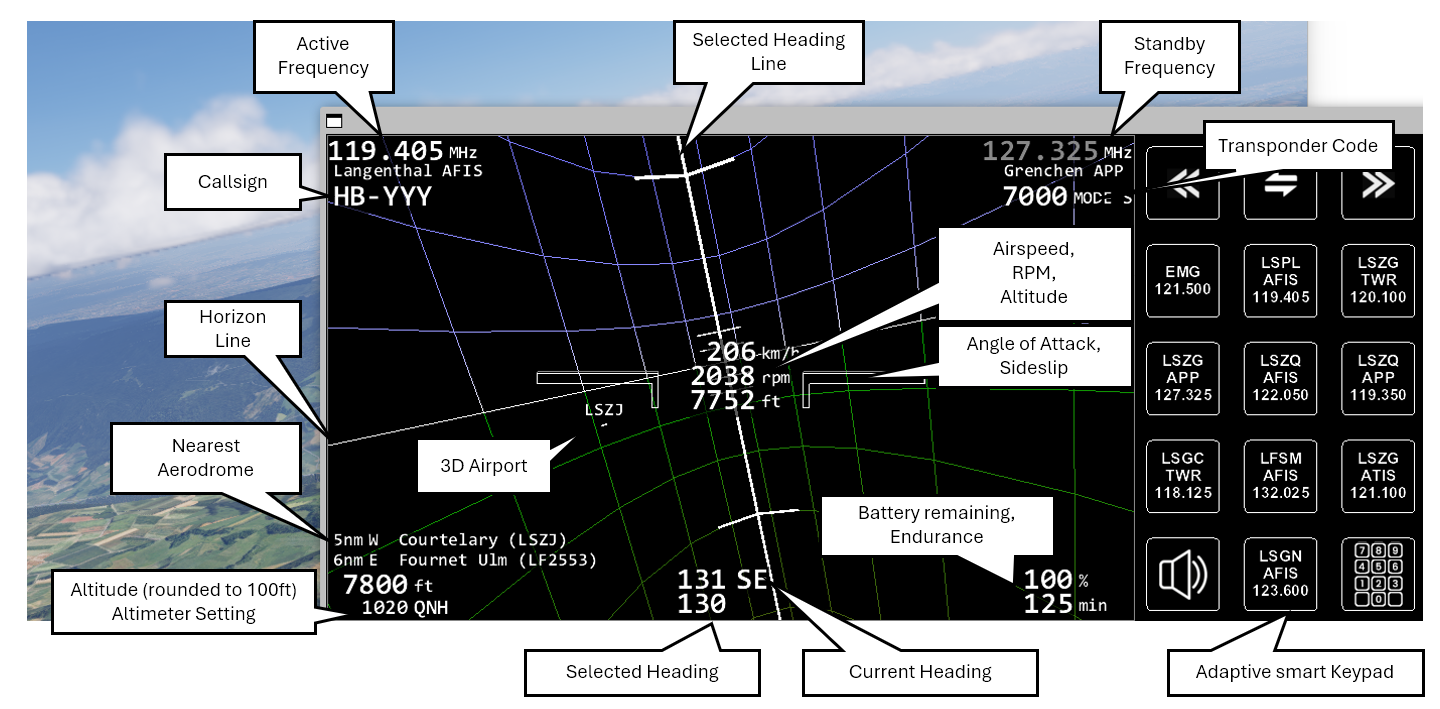
Once we had to develop software and hardware for the electric propulsion system anyway, we made a larger decision: to design the flight and propulsion instrumentation ourselves. From this, the Lightweight Integrated Flight Display, or LIFD, was born.
LIFD is based on a few core principles. We want to understand every technical layer of the aircraft, from motor controller and battery management system to sensors, displays, software, and pilot interface. We also want to build exactly what this aircraft needs—and nothing unnecessary. That means less weight, less cabling, less documentation, and a cockpit interface tailored to the actual mission.
Wireless communication is used wherever it makes sense, reducing plumbing, wiring, and possible failure points. For example, an airspeed and angle-of-attack sensor can be designed to need only power, without pressure tubing or signal wires running through the aircraft.
At the same time, LIFD is more than a display. It is an open, modular avionics framework designed around redundancy, failover, sensor processing, and a pilot-centred user interface. It also allows us to make use of existing pilot tools such as electronic flight bags for navigation and planning.
The software is being developed with aviation design-assurance principles in mind, including verification and testing inspired by DO-178. The framework is intended to be open and extensible, with source code planned for publication on GitHub.
For us, LIFD is not only an instrument panel. It is part of the broader philosophy of the e131 project: lightweight, transparent, technically rigorous, human factors and ergonomics-based, and built specifically for the aircraft we want to fly.
Stand by for development updates…